
Functional range of motion
Pick a reach, squat or stride you know well. Where does it feel free, and where do you start finding a way around the tight spot?
The Myofascial & Movement Clinic
Bring a reach, a stride or a squat that feels cut short. In fully clothed Thai-style mat work, you and your student explore what gives that movement more room between training days.
Supervised student clinic · Santa Fe
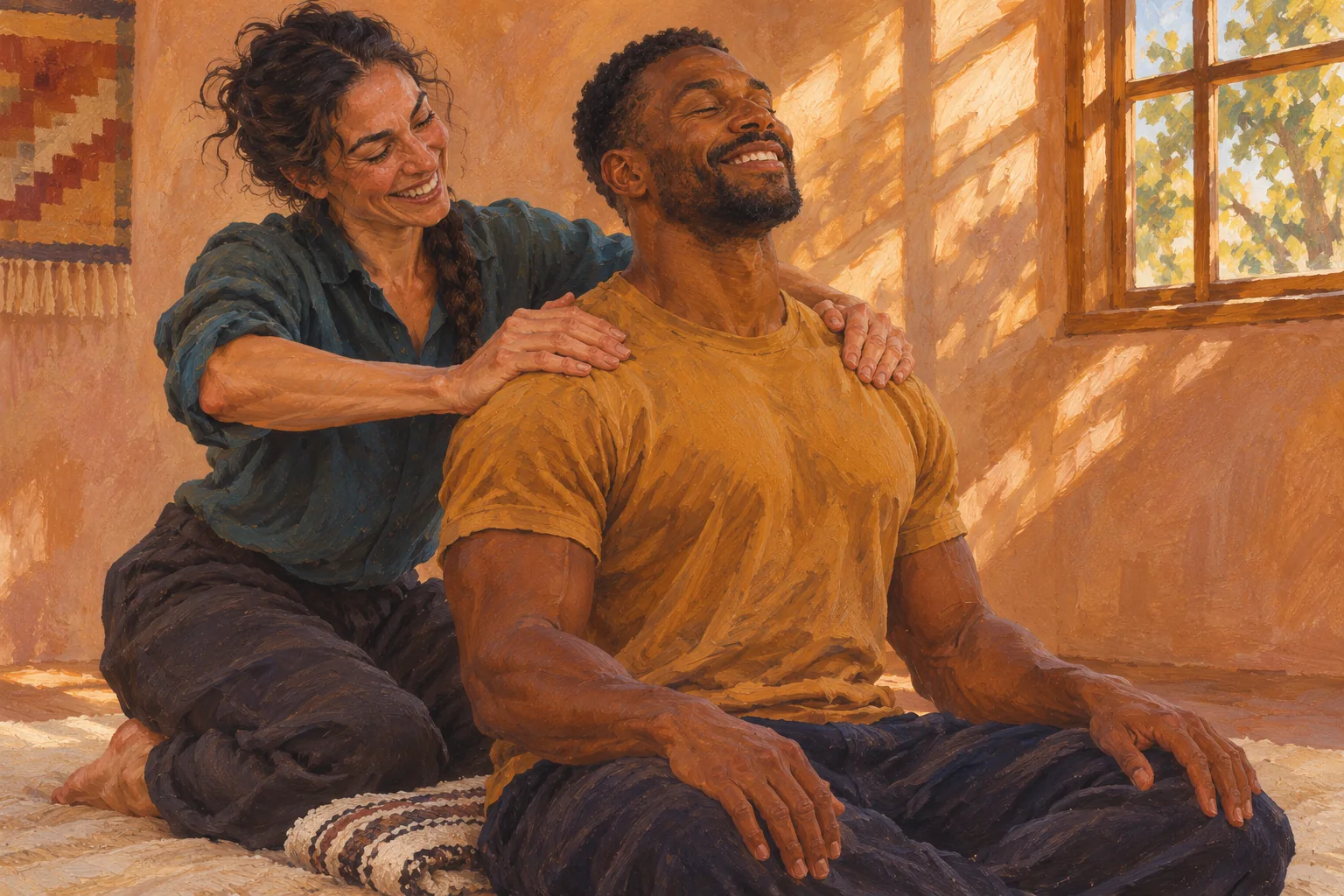
A question to start with
Maybe it’s reaching for a climbing hold, or turning your head far enough to look back along the trail. Show your student the movement. You’ll have something familiar to try again when you stand up.
Pick a reach, squat or stride you know well. Where does it feel free, and where do you start finding a way around the tight spot?
Tell us what you trained yesterday and what’s on the calendar tomorrow. That helps us choose where to linger and how much pressure fits between those two days.
If a scar or an area you suspect is adhered seems to tug, show us where. Your student can apply sustained contact, then invite you to repeat the movement and describe what you feel.
Point and flex a foot and your calf muscles help move blood back toward your heart. When you rise from the mat, take a few ordinary steps. How do your legs feel under you?
The illustrated lookbook
In these illustrations, Marisol works with Santa Fe athletes, fully clothed on the mat. Your own session is with a supervised student who adapts the work to your sport, comfort and available time.
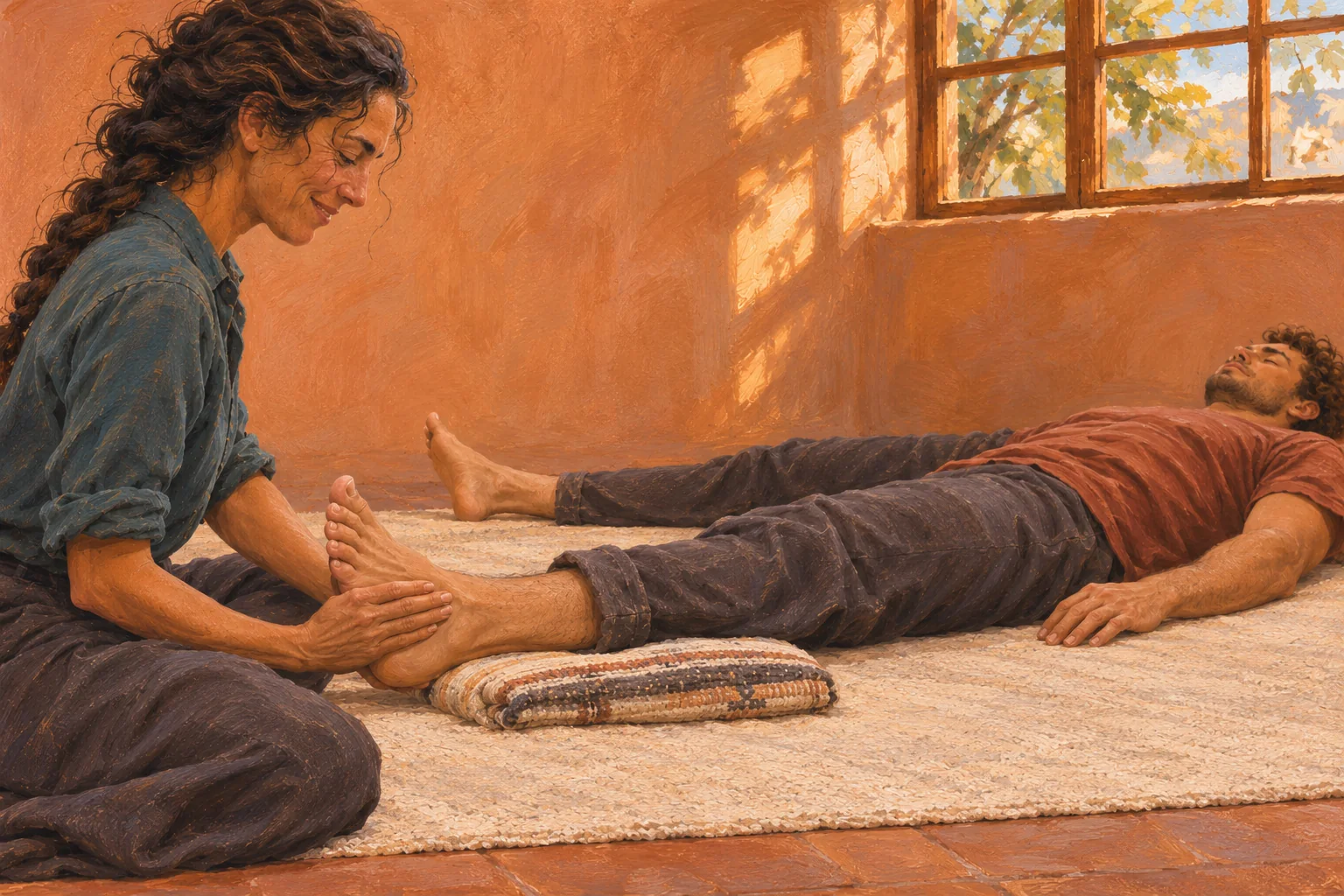
A blanket cushions the ankle. Marisol cups the runner’s heel while he points and flexes his foot, trying the small movement inside a much longer stride.
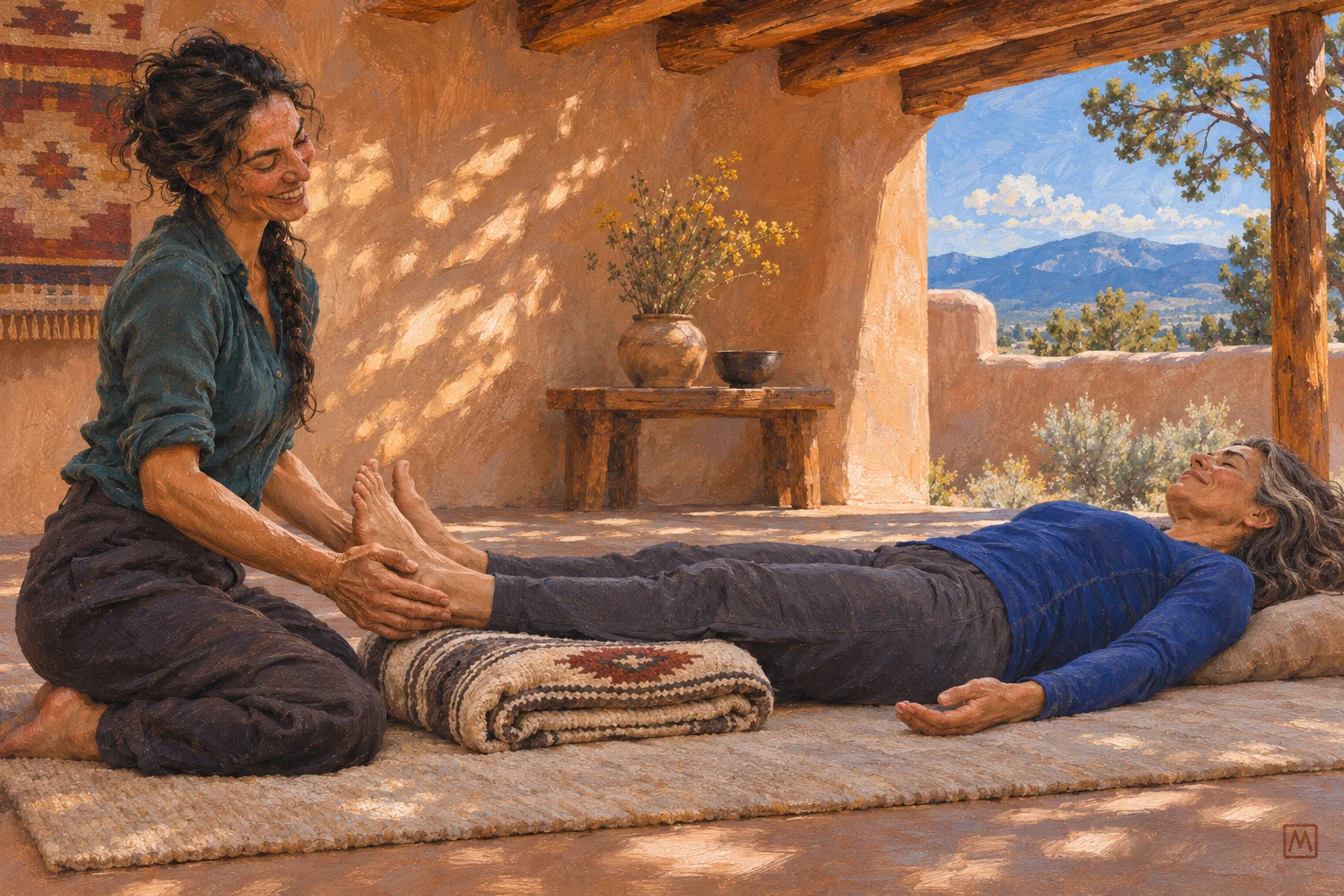
Both legs rest on the mat. Before asking the runner to move an ankle, Marisol meets her feet and waits for their weight to settle.
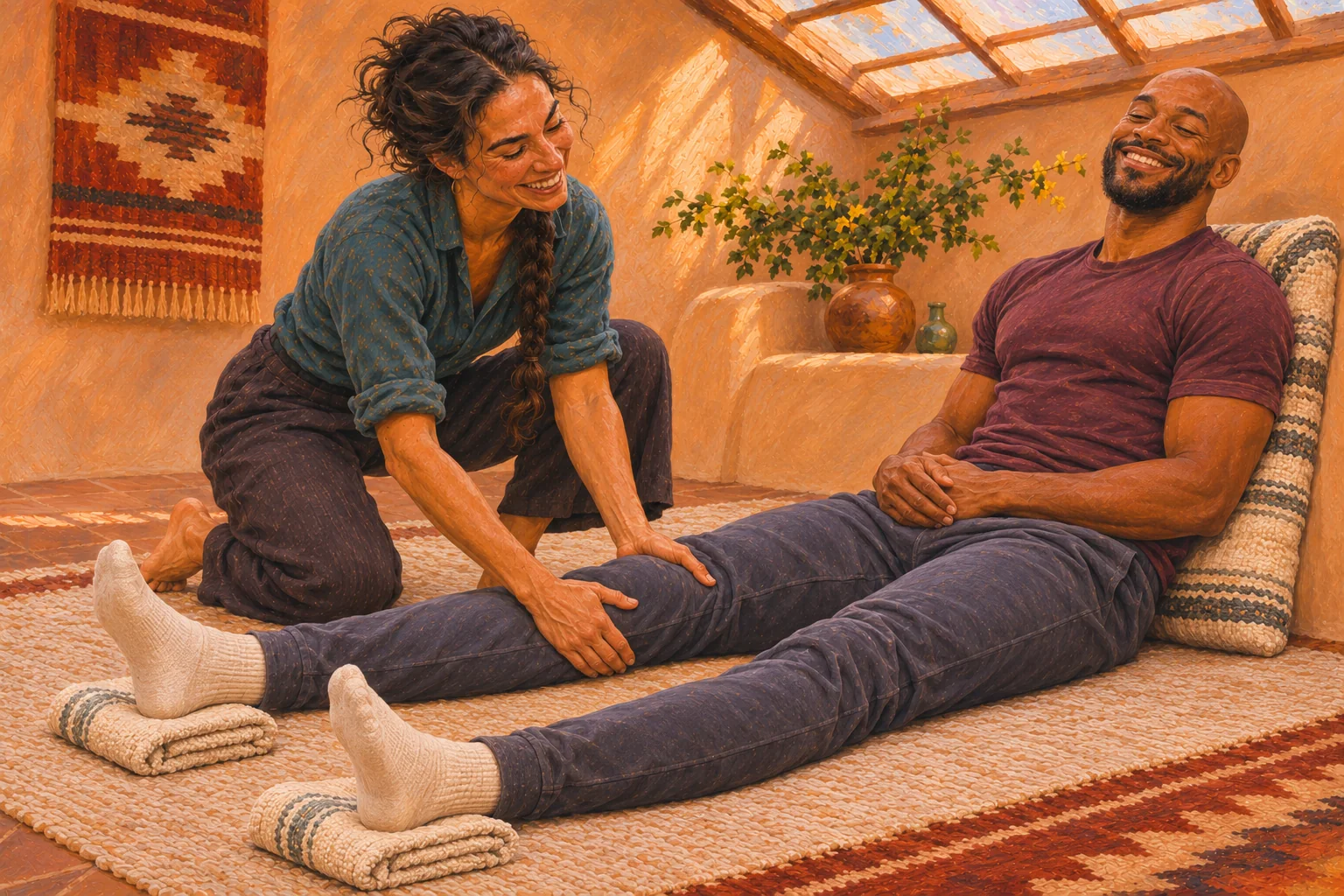
The hill repeats are over. With his back and heels supported, the sprinter shows Marisol where the last climb stayed with him. She works through his training trousers.
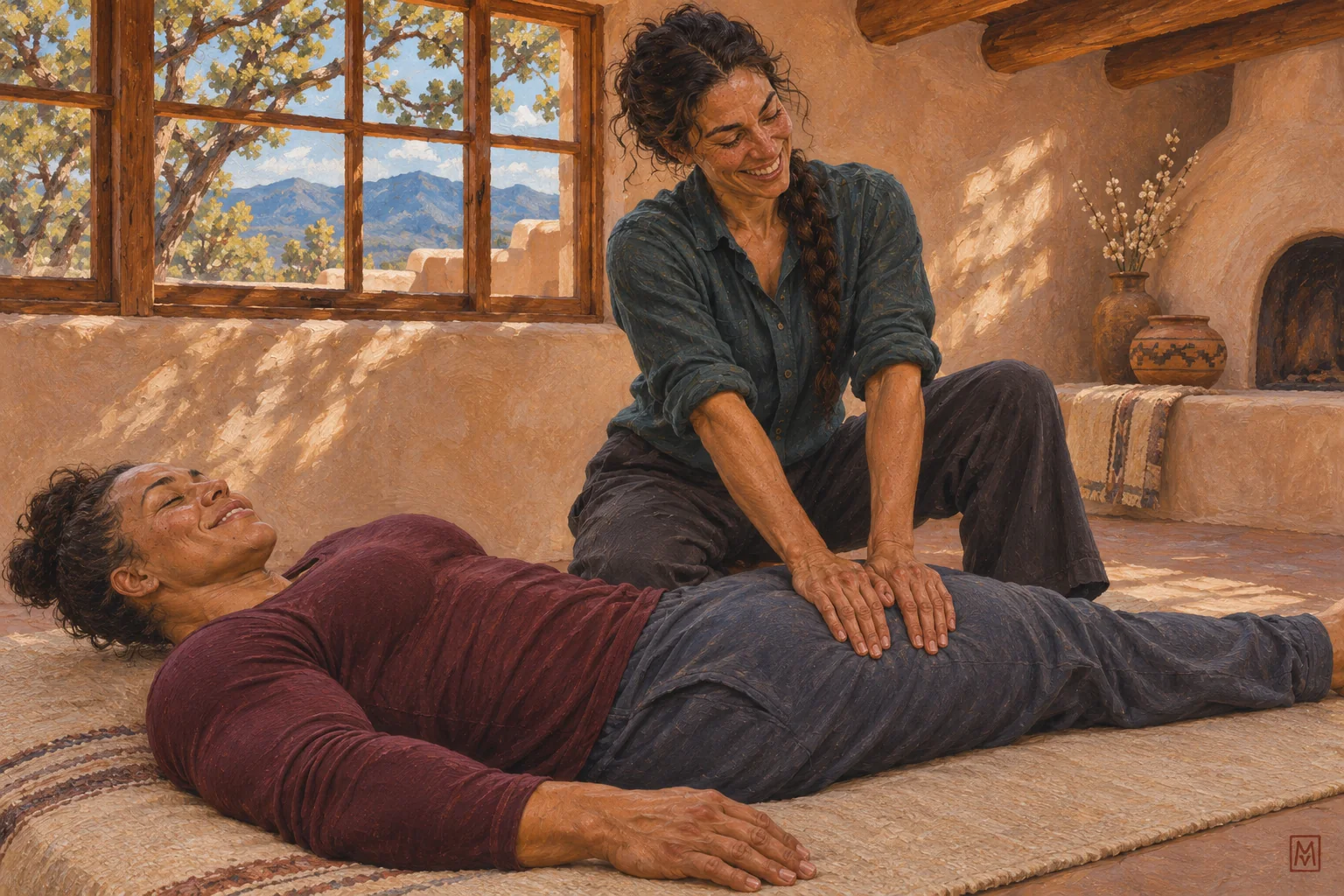
A week of squats gives the lifter a clear choice of focus. Marisol settles her palms on the thighs, and the athlete chooses the pressure.
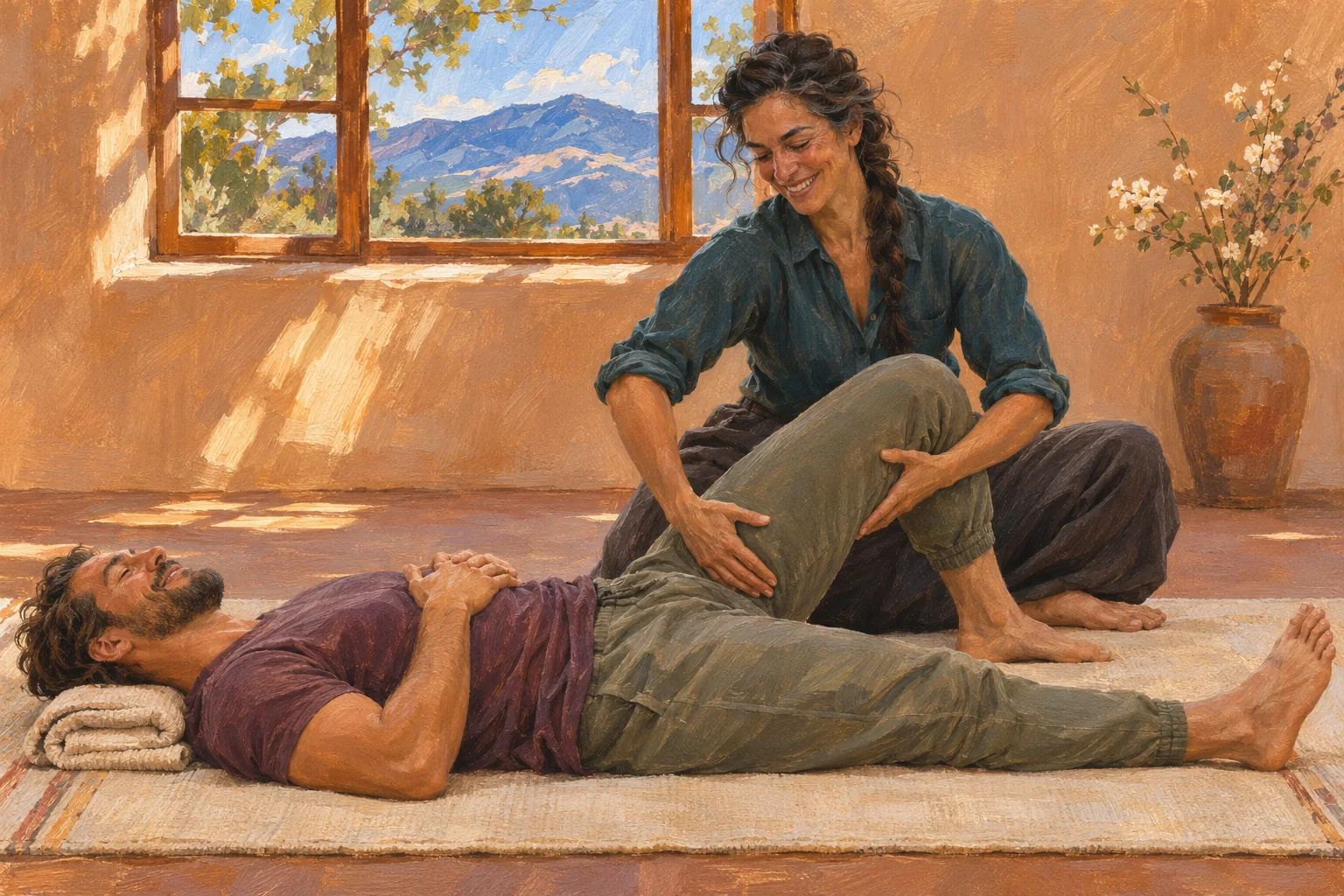
One knee bends, one foot plants. As Marisol rocks the leg a little, the cyclist can tell her just where he feels the pull.
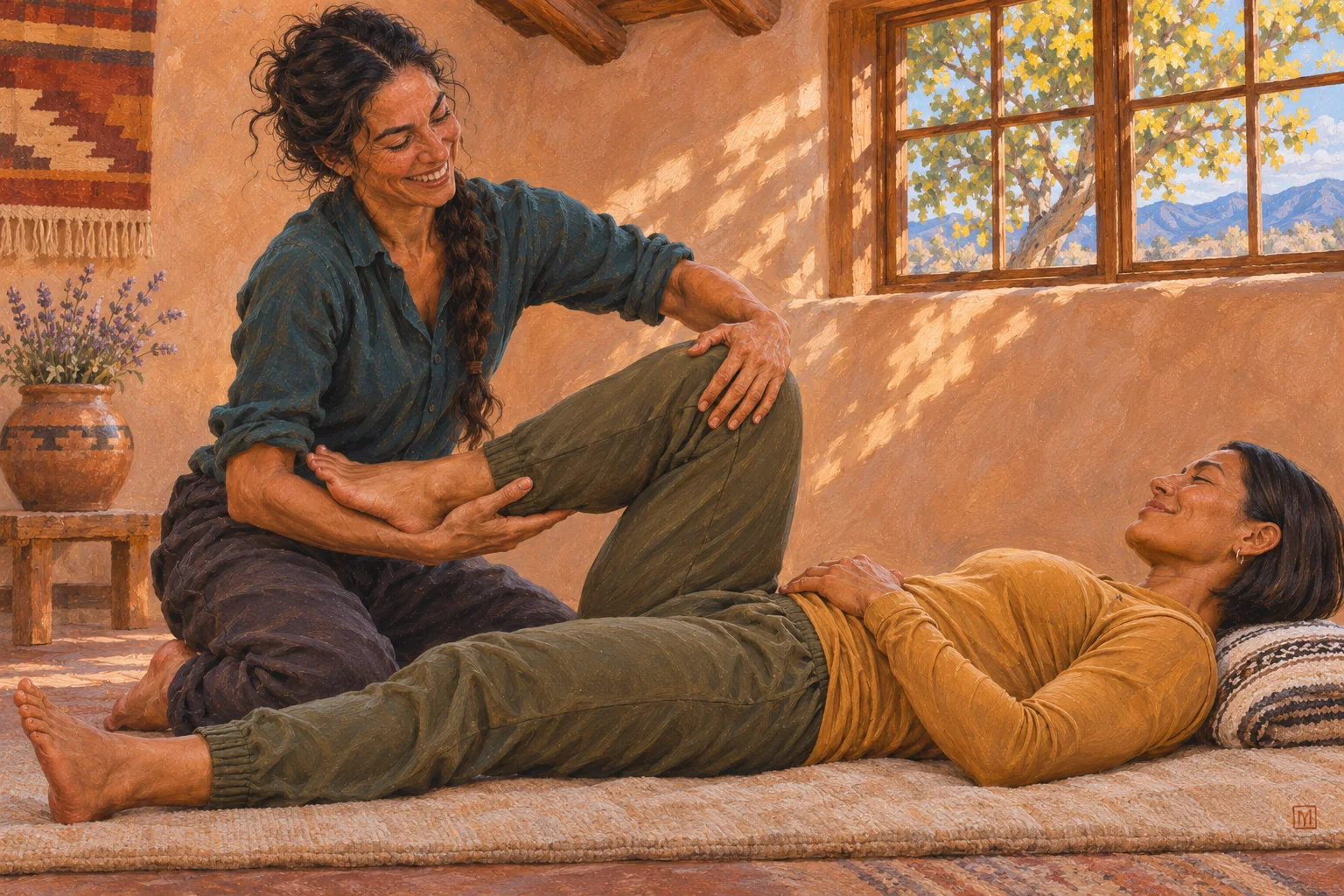
Marisol carries the folded leg while the player chooses how far to bring her thigh toward her body.
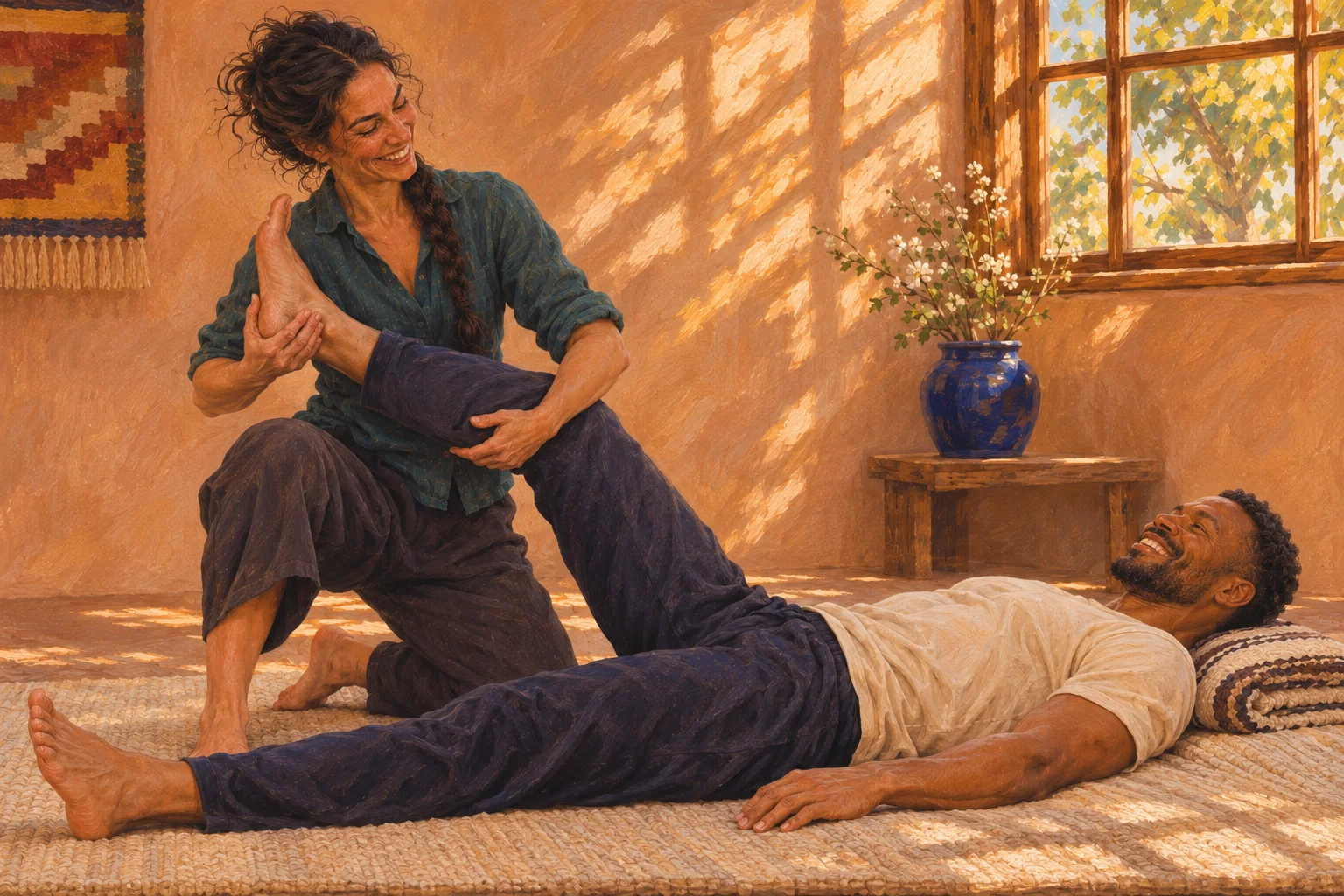
Heel and calf rise together, with a little bend in the knee. The other leg stays grounded as the athlete explores the available range at his hip.
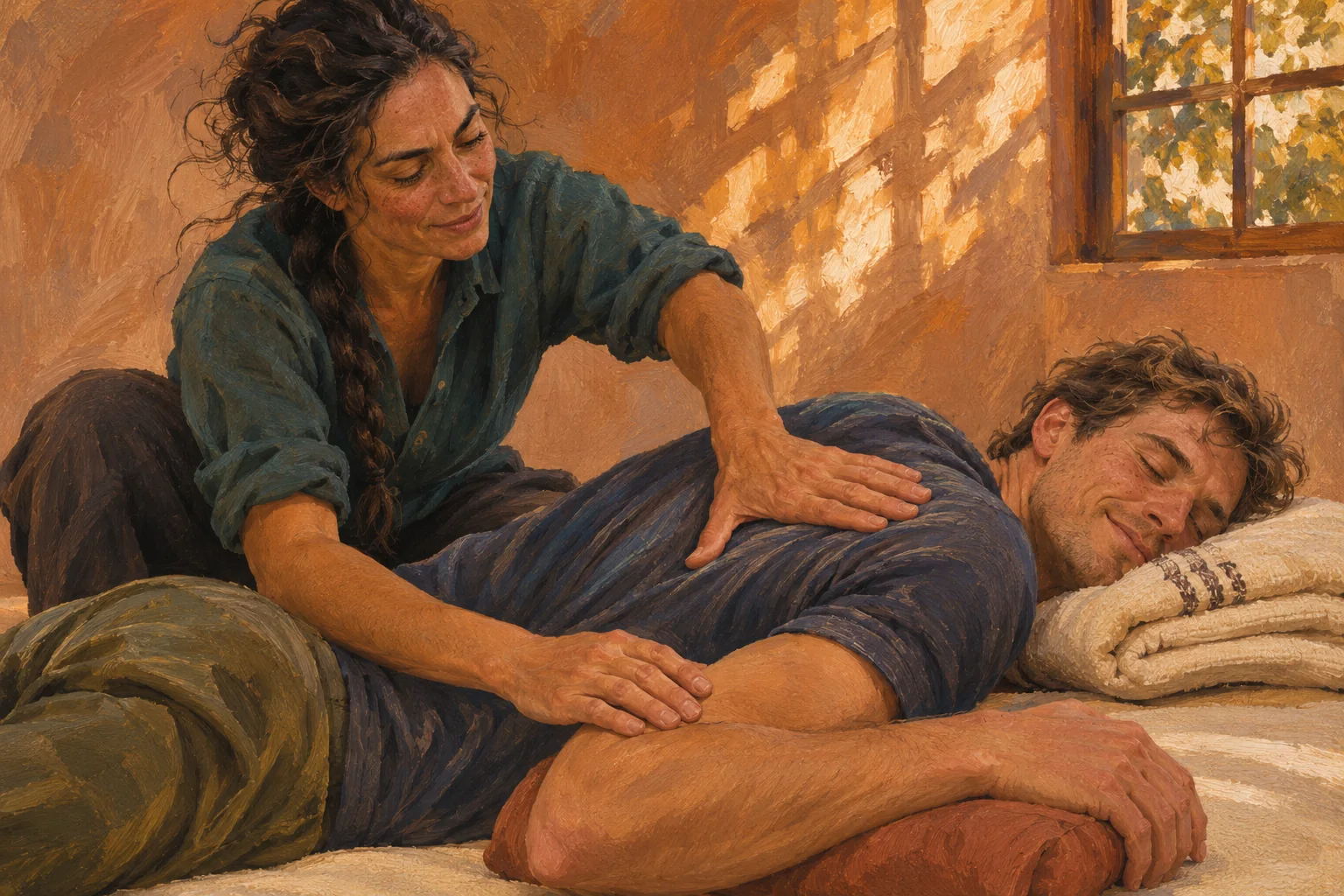
A folded blanket keeps the climber’s head level. His arm rests in front of him, giving Marisol room to work across the upper back with a broad palm.
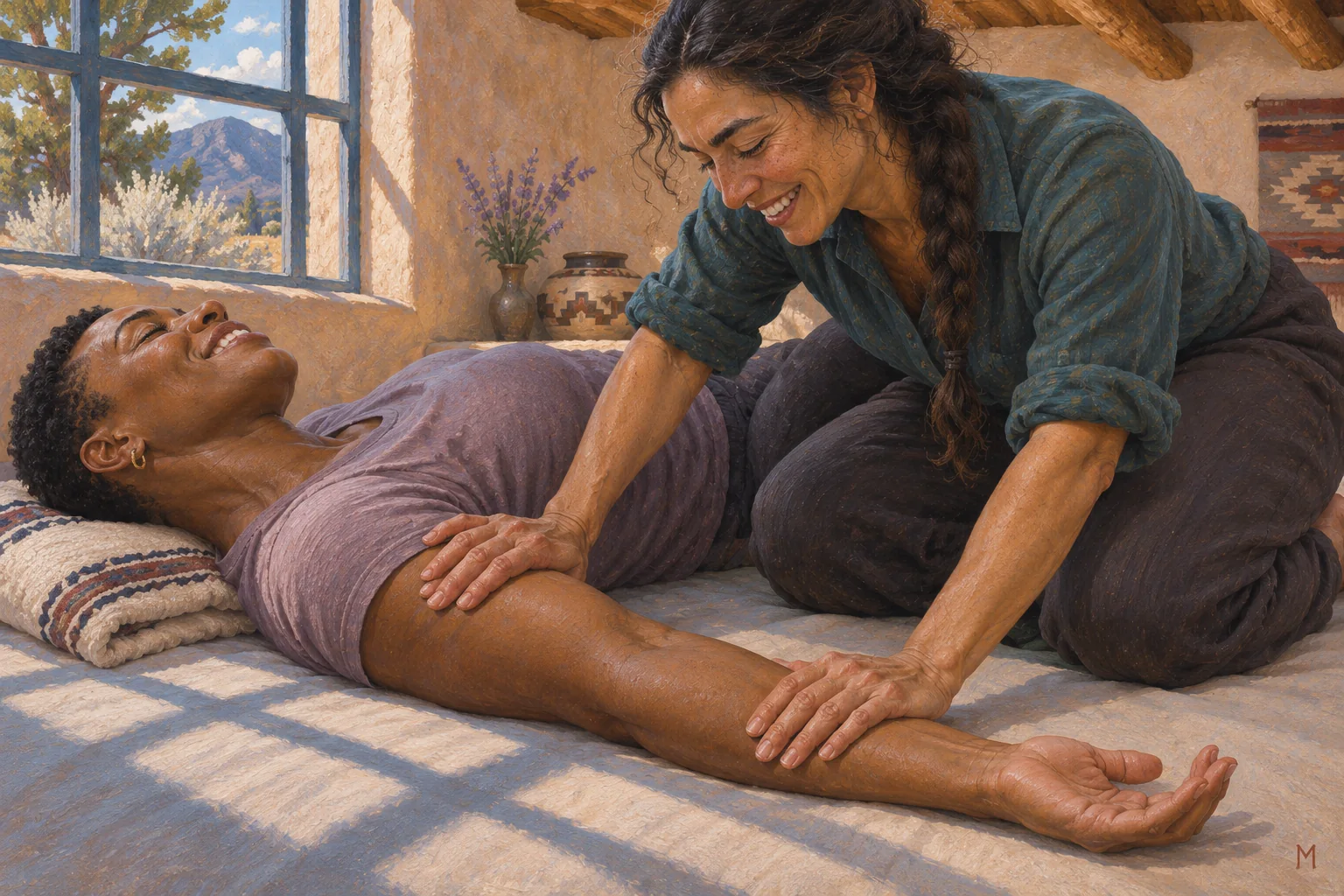
The rower lays her arm on the mat and lets its weight go. Marisol follows the length of the arm with broad contact.
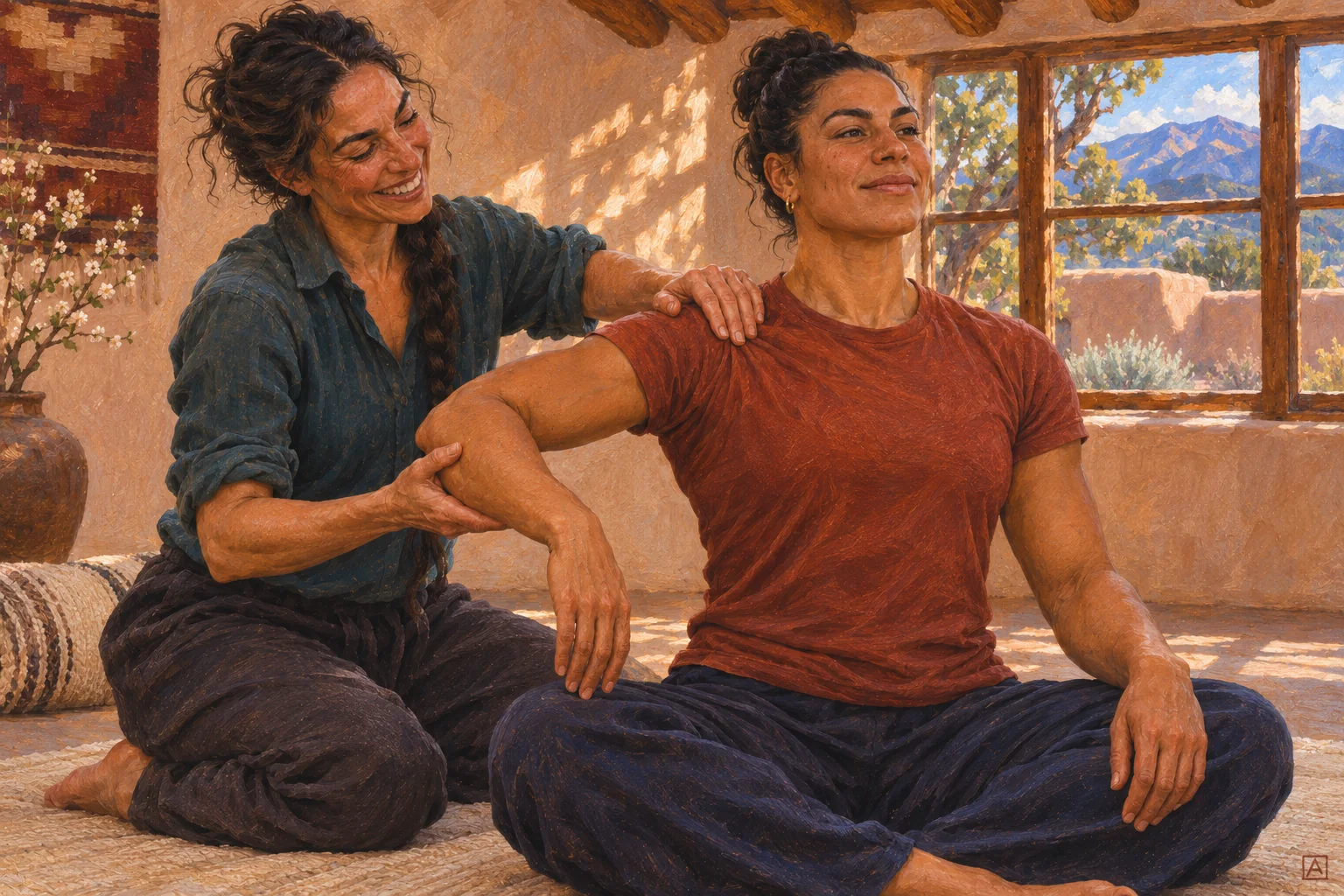
Sitting up, the swimmer can show Marisol the exact place in her stroke where the reach catches. With the arm supported, they explore that part together.
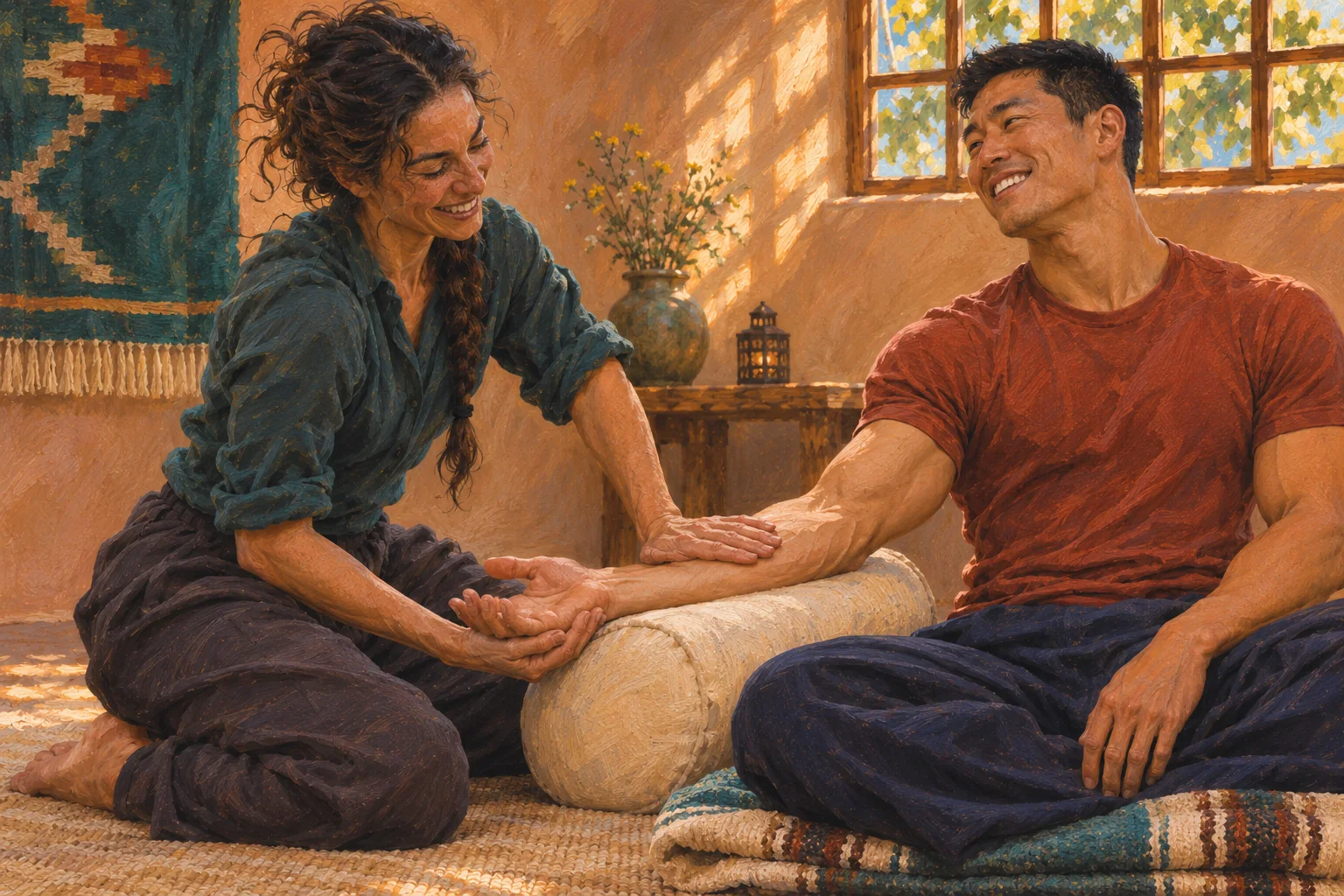
The bolster does some of the work today. The climber rests his forearm while Marisol supports the hand that spent the afternoon on holds.
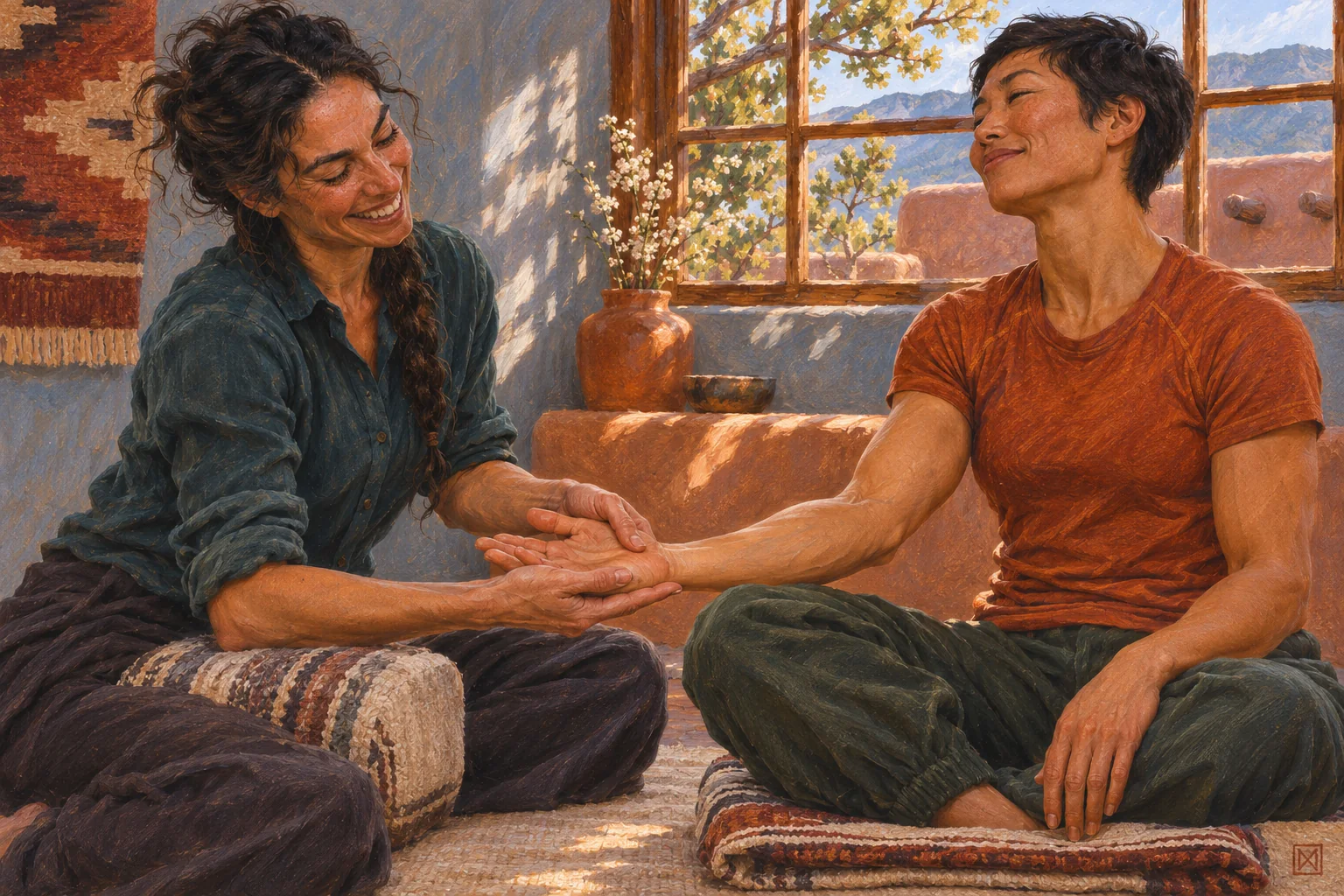
Marisol works across the supported palm. The climber opens and closes his hand, a small and immediate way to compare the feel of his grip.
Back on your feet
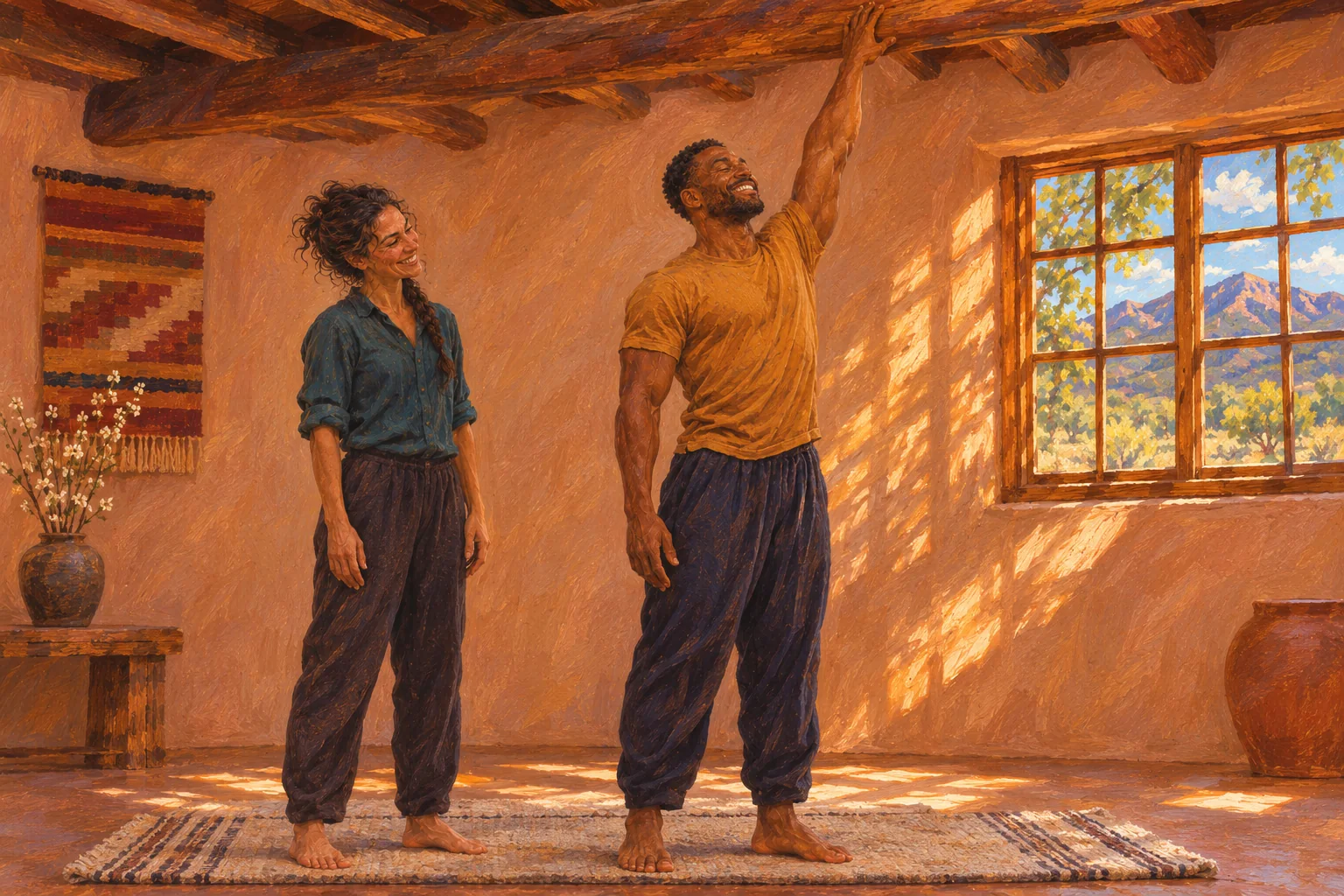
The athlete on the cover reaches for the beam again under his own power. Marisol watches and asks what he notices. Sometimes the hand travels farther. Sometimes getting there simply takes less effort.
Bright Moon · Santa Fe
Choose a length, date and time, then sign in or create a guest account to confirm. You can reserve now, complete your intake before you arrive and pay at the clinic.
You’ll see your price before you reserve. You can pay at the clinic.
In this 240-hour certificate, students study regional anatomy, assessment and treatment planning, then practice under supervision. The question they bring back to the mat is simple. What does the guest notice when they move?
Certified Myofascial Release TherapistAcross 29 sports-massage trials, researchers found small average improvements in flexibility and post-exercise soreness. How myofascial work affects tissue is still being studied. Here, you and your student can compare what a familiar movement feels like before and after the work.